Basic Sentence Patterns in English: Basic 5 and Basic 7 Explained
Basic 5 और basic 7 English sentence patterns को examples, objects, complements, adverbials, exam traps और practice के साथ समझें।
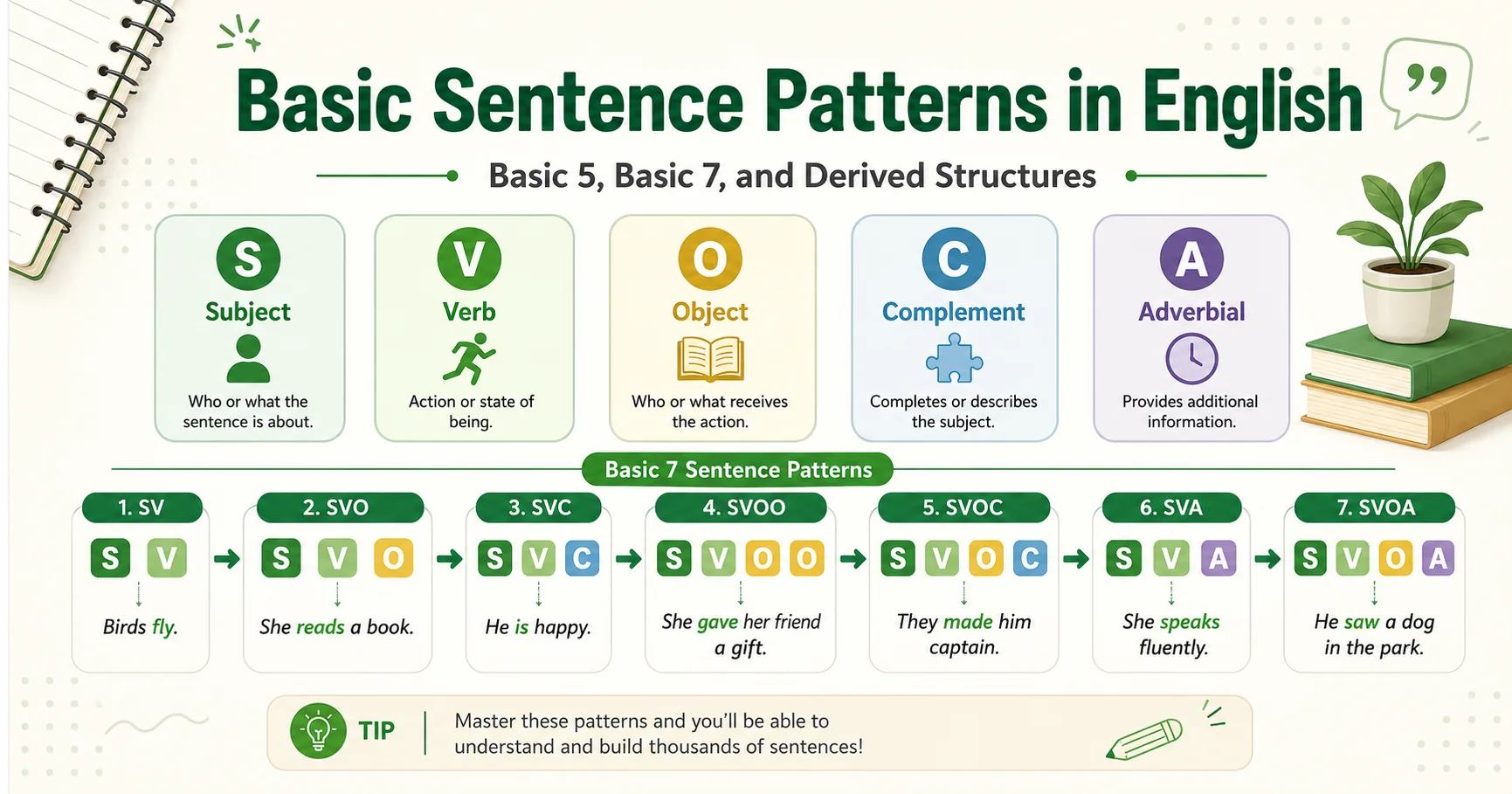
English sentences लंबी और difficult लग सकती हैं, लेकिन उनकी core structure अक्सर बहुत simple होती है। अगर आपको sentence pattern समझ आ जाए, तो आप long sentences को छोटे parts में break करके उनका grammar पहचान सकते हैं।
Examples देखें:
- Birds fly.
- She opened the door.
- He is a teacher.
- They made him captain.
- She lives in Delhi.
- He put the book on the table.
इन sentences में words अलग हैं, लेकिन हर sentence एक clear pattern follow करता है। इसी structure को sentence pattern कहते हैं।
Many grammar books 5 basic sentence patterns सिखाती हैं। कुछ books 7 basic sentence patterns भी सिखाती हैं। दोनों approaches useful हैं। फर्क mainly इस बात में है कि book Adverbial (A) को कैसे treat करती है — optional information की तरह या sentence complete करने वाली necessary part की तरह।
Sentence pattern sentence या clause के main elements की arrangement है। यह हर small word को अलग-अलग label नहीं करता; यह sentence की core grammar structure दिखाता है।
| Sentence | Core Pattern |
|---|---|
| Birds fly. | Subject + Verb |
| She read a book. | Subject + Verb + Object |
| He is happy. | Subject + Verb + Complement |
| My father gave me a gift. | Subject + Verb + Indirect Object + Direct Object |
Long sentence में भी core ढूँढी जा सकती है:
The little boy in the red shirt quickly opened the wooden door.
Core है:
boy opened door
Pattern है:
Subject + Verb + Object
यानी SVO.
Sentence words का group है जो complete thought express करता है।
Examples:
- She smiled.
- He bought a car.
- Although it was raining, we went outside.
Clause words का group है जिसमें subject और finite verb होता है।
Example:
She stayed home because it was raining.
इसमें दो clauses हैं:
- She stayed home.
- because it was raining.
Phrase words का group है जो one unit की तरह काम करता है, लेकिन उसमें subject + finite verb दोनों नहीं होते।
Examples:
- in the morning
- the tall boy
- very beautiful
- to learn English
- reading books
Sentence pattern clause के essential elements की arrangement है। Long sentence में एक से अधिक clauses हो सकते हैं, इसलिए pattern analysis असल में often clause pattern analysis होता है।
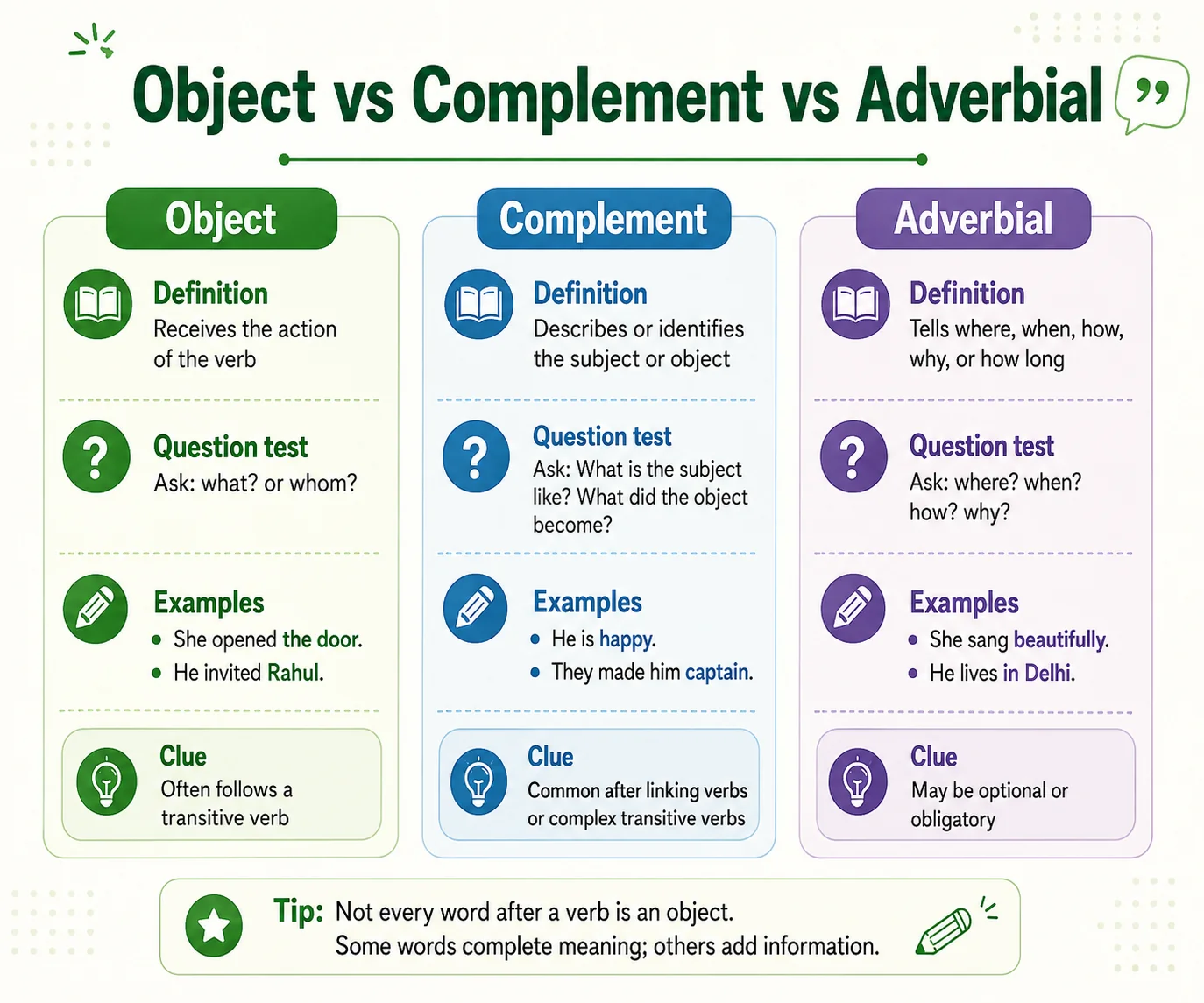
Most sentence patterns पाँच elements से बनते हैं:
| Symbol | Full Form | काम |
|---|---|---|
| S | Subject | कौन या क्या action कर रहा है / sentence किसके बारे में है |
| V | Verb | action, state या relation बताता है |
| O | Object | action किस पर हो रहा है |
| C | Complement | subject या object के बारे में extra identity/quality बताता है |
| A | Adverbial | place, time, manner, reason आदि बताता है |
Example:
She put the book on the table.
- She = Subject
- put = Verb
- the book = Object
- on the table = Adverbial
Pattern: SVOA
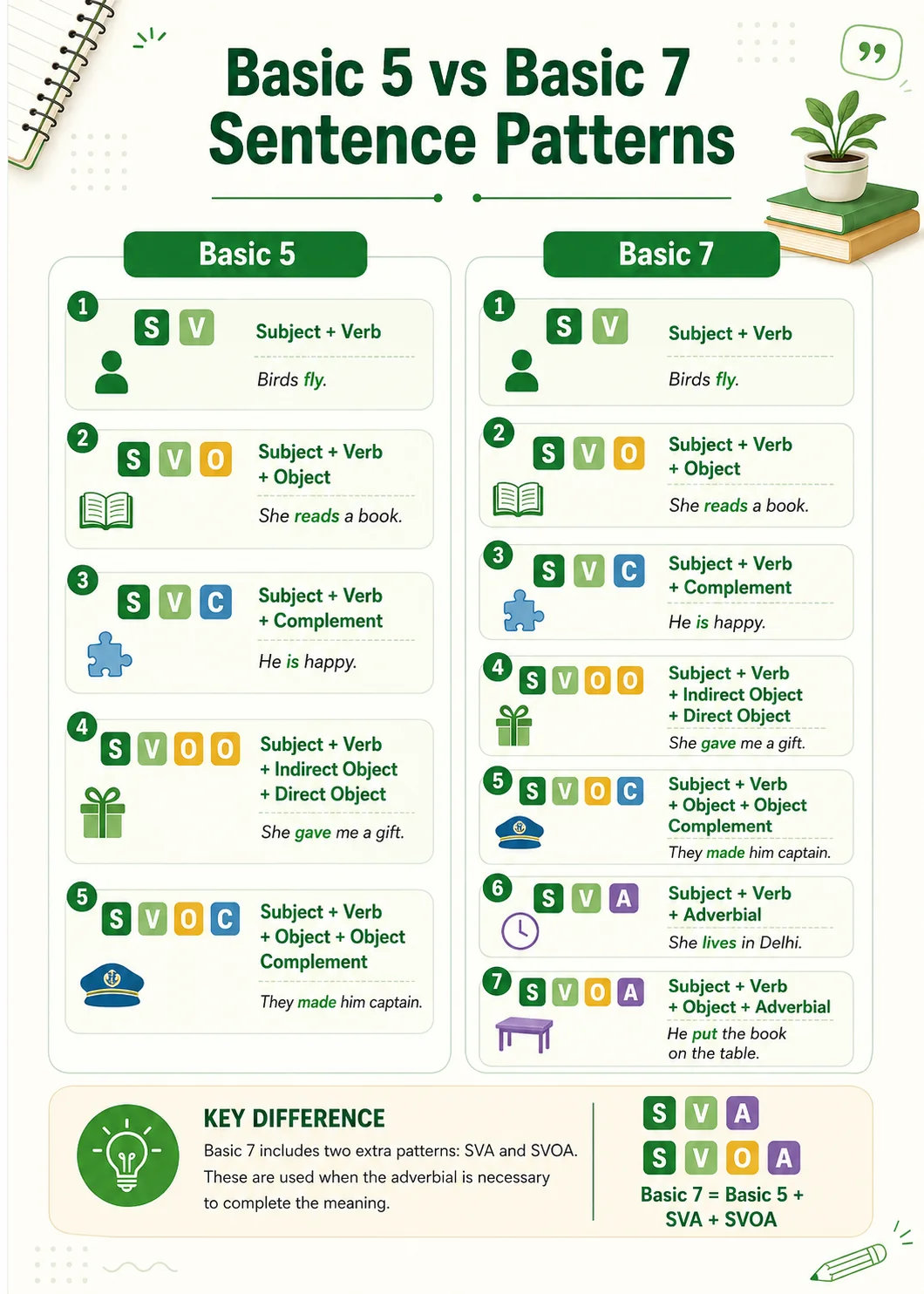
Traditional grammar में common basic 5 patterns ये हैं:
| Pattern | Name | Example |
|---|---|---|
| SV | Subject + Verb | Birds fly. |
| SVO | Subject + Verb + Object | She reads books. |
| SVC | Subject + Verb + Complement | He is happy. |
| SVOO | Subject + Verb + Indirect Object + Direct Object | She gave me a pen. |
| SVOC | Subject + Verb + Object + Complement | They made him captain. |
Birds fly. The baby slept.
यहाँ verb अपने आप complete है। Object की ज़रूरत नहीं है।
She opened the door. We watched a movie.
Verb action किसी object पर जाता है। ऐसे verbs को transitive verbs कहते हैं।
He is a teacher. The soup smells good.
Complement subject को identify या describe करता है। यहाँ a teacher और good subject के बारे में information देते हैं।
She gave me a gift. He sent his friend a message.
- Indirect object = किसे? (me, his friend)
- Direct object = क्या? (a gift, a message)
They elected him president. The news made her sad.
Object complement object के बारे में बताता है। president बताता है कि him क्या बना। sad बताता है कि her की state क्या हुई।
कुछ grammar books adverbials को अलग importance देती हैं और basic 7 patterns सिखाती हैं। उनमें basic 5 के साथ दो patterns और जोड़े जाते हैं:
| Pattern | Example | क्यों important है |
|---|---|---|
| SVA | She lives in Delhi. | Place adverbial meaning complete करता है |
| SVOA | He put the book on the table. | Object के बाद place adverbial necessary है |
She lives in Delhi.
यहाँ in Delhi optional नहीं है। अगर हम सिर्फ She lives कहें, तो meaning incomplete या अलग लगेगा। इसलिए कुछ grammars इसे separate pattern मानती हैं।
He put the book on the table.
Put usually object + place मांगता है। सिर्फ He put the book incomplete लगता है। इसलिए on the table necessary adverbial है।
Main difference Adverbial की treatment है।
- Basic 5 approach में adverbials often extra information माने जाते हैं।
- Basic 7 approach में कुछ adverbials को core pattern का part माना जाता है, because sentence उनके बिना incomplete लगता है।
Compare करें:
| Sentence | Basic 5 View | Basic 7 View |
|---|---|---|
| She slept in the room. | SV + optional adverbial | SV + optional adverbial |
| She lives in Delhi. | SV + necessary place phrase | SVA |
| He put the book on the table. | SVO + necessary place phrase | SVOA |
दोनों systems गलत नहीं हैं। Exams में वही framework follow करें जो syllabus या teacher use करता है। Conceptually, याद रखें: कुछ adverbials optional होते हैं, कुछ obligatory।
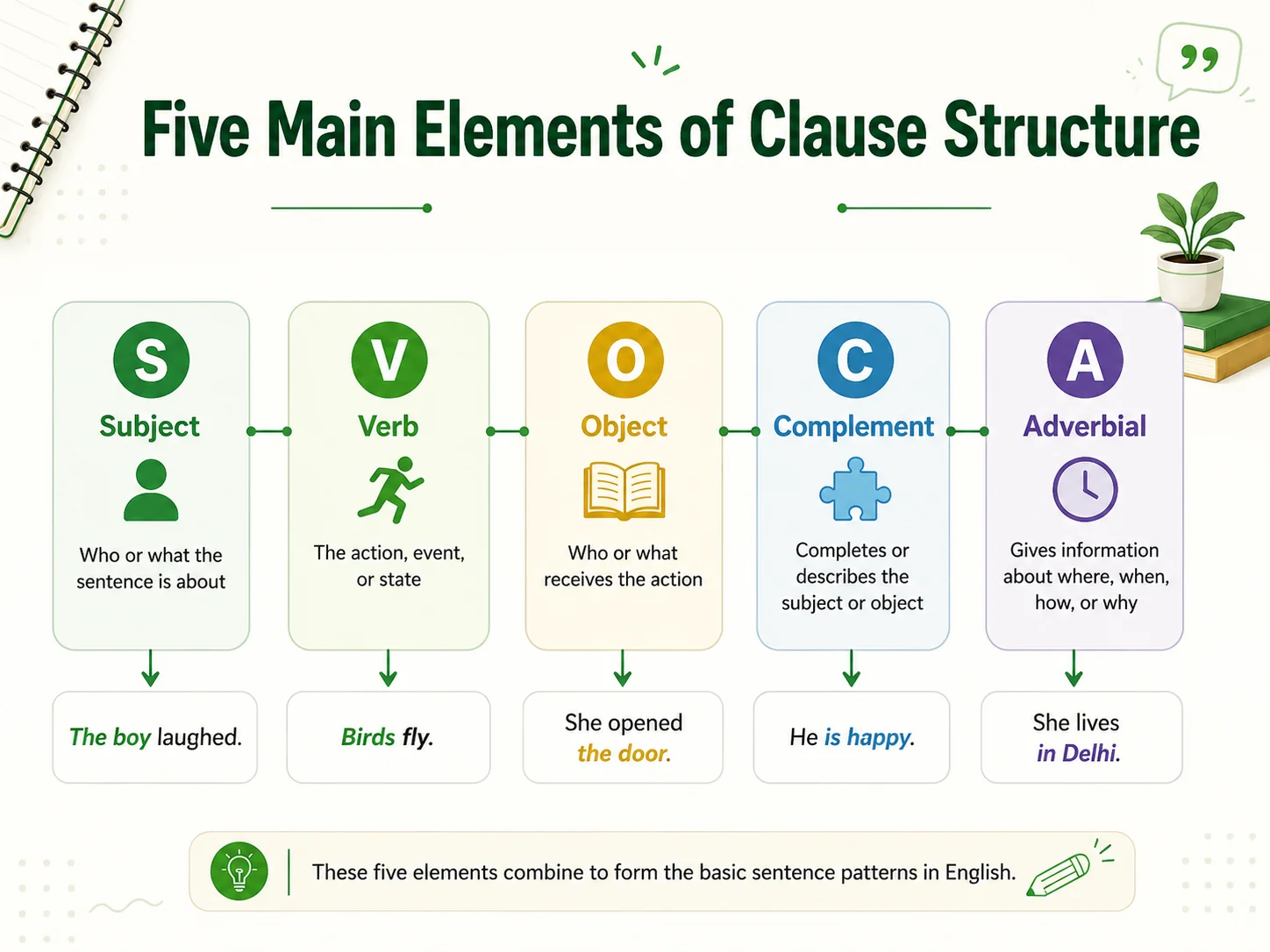
Object usually answers what? or whom? after action verb.
She bought a book.
Bought what? a book. Pattern: SVO.
Complement subject या object को describe/identify करता है। It does not receive the action like an object.
He became a doctor.
Became what? a doctor. लेकिन doctor action receive नहीं कर रहा। यह subject की identity है। Pattern: SVC.
Adverbial answers place, time, manner, reason, condition, frequency आदि।
She lives in Mumbai.
Where? in Mumbai. यहाँ place phrase necessary है, इसलिए pattern SVA हो सकता है।
He is a teacher.
A teacher object नहीं है। यह subject की identity है। Pattern: SVC.
They made him leader.
- They = S
- made = V
- him = O
- leader = C
Pattern: SVOC. यहाँ leader object complement है।
He kept the keys in the drawer.
In the drawer sentence meaning complete करता है। कई analyses में pattern SVOA होगा।
The girl with the blue bag near the gate smiled.
Subject phrase लंबा है, लेकिन head subject girl है। Verb smiled है। Pattern: SV.
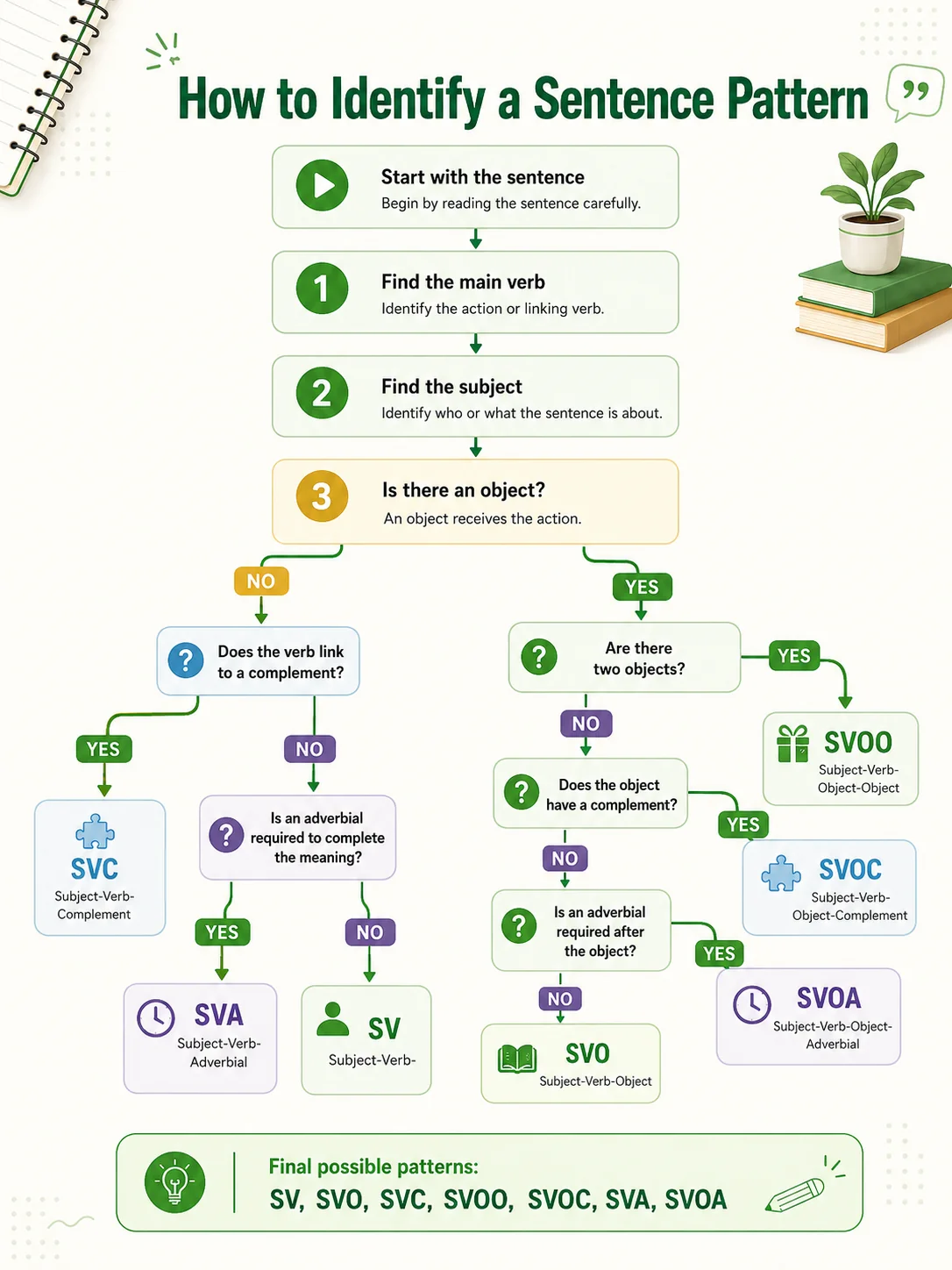
- पहले main verb ढूँढें।
- Verb से पूछें: कौन? या क्या? यही subject है।
- Verb से पूछें: what/whom? Object मिल सकता है।
- Check करें कि कोई word subject/object की identity या quality बता रहा है या नहीं। वह complement हो सकता है।
- Place/time/manner phrase देखें। अगर वह necessary है, pattern में A जोड़ें।
- Long modifiers हटाकर sentence की core structure पढ़ें।
Example:
The teacher gave the students a difficult assignment yesterday.
- The teacher = S
- gave = V
- the students = IO
- a difficult assignment = DO
- yesterday = optional adverbial
Core pattern: SVOO.
Basic pattern sentence के core को बताता है। Negative, question, passive, relative clause या complex sentence आने से core relation बदल भी सकता है और कभी-कभी वही रहता है।
She did not open the door.
Core pattern still SVO है: She + open + door.
Did she open the door?
Word order बदल गया, लेकिन core pattern still SVO है।
The door was opened by her.
Active SVO था: She opened the door. Passive में object subject position में आ गया।
She stayed home because it was raining.
Clause 1: She stayed home = SVA/SV depending analysis. Clause 2: it was raining = SV.
| Mistake | Better Analysis |
|---|---|
| Every word को अलग pattern element मानना | केवल core elements identify करें |
| Helping verb को main verb से अलग कर देना | verb phrase को साथ पढ़ें: has been working |
| Complement और object को same समझना | Object action receive करता है; complement identity/quality देता है |
| Optional adverbial को necessary समझना | Check करें sentence बिना phrase complete है या नहीं |
| Long phrase देखकर subject गलत चुनना | Head noun और main verb पर focus करें |
Identify the pattern.
- The child laughed.
- She wrote a letter.
- The sky became dark.
- He gave me advice.
- They painted the wall blue.
- She lives in Jaipur.
- He placed the glass on the shelf.
- The old man near the temple smiled.
- The news made everyone nervous.
- My brother sent his teacher an email.
- SV
- SVO
- SVC
- SVOO
- SVOC
- SVA
- SVOA
- SV
- SVOC
- SVOO
- Sentence pattern clause की core structure बताता है।
- Main elements हैं: S, V, O, C, A.
- Basic 5 patterns: SV, SVO, SVC, SVOO, SVOC.
- Basic 7 में SVA और SVOA भी add होते हैं।
- Complement object नहीं होता; वह subject/object की identity या quality बताता है।
- Adverbial optional भी हो सकता है और necessary भी।
- Exam में long modifiers हटाकर main subject, verb और required complements/objects/adverbials देखें।
हाँ। दोनों grammar teaching frameworks हैं। Basic 7 adverbials को ज्यादा clearly handle करता है, especially जब place या direction phrase sentence complete करने के लिए necessary हो।
Simple clauses को usually fit किया जा सकता है। Long या complex sentences में पहले clauses अलग करें, फिर हर clause का pattern identify करें।
Object action receive करता है। Complement subject या object के बारे में identity, role या quality बताता है।
नहीं। She slept yesterday में yesterday optional है। लेकिन She lives in Delhi में place phrase meaning complete करता है।
Main verb ढूँढें, फिर subject और verb के required parts identify करें। Long modifiers को temporarily ignore करें।